A Cheese Glossary
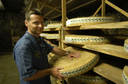
Affinage: French word for the aging or ripening of cheese.
Affineur: French word for the expert who is responsible for aging/ripening and care of cheeses.
Aging: The aging or ripening process can last from a
few days to a year or more. During the process of aging, the cheese
loses moisture and develops a fuller, stronger flavor.
Annatto: A reddish-yellow dye derived from the outer
covering of the seed of the Annatto tree, grown in Central and South
America. Annatto is generally thought to have no taste and is added to
cheese to create a orangeish-reddish-yellowish rind color.
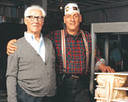
Artisanal: Artisanal cheese is made by hand, in
small batches using traditional tools and techniques, with little to no
mechanization involved in the cheese's production.
It may be made from milk produced by animals raised on the cheesemaker's
property (thus called Farmstead), or it may be made from milk produced
on nearby farms.
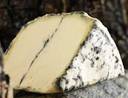
Bloomy Rind: Bloomy Rind or soft-ripened cheeses have been treated with mold so that they ripen from the outside rind inwards.
The thin crust or rind is white and sort of velvety or fuzzy to the
touch ... thus the word "bloomy" refers to that tactile sensation when
handling these cheeses. The rind is generally edible, though many
people choose not to eat the rind. Soft-ripened cheeses are semi-soft
and creamy in consistency.
Brushed Rind: A natural rind cheese which is
brushed in a process designed to keep mold from forming and to keep the
interior paste or meat of the cheese moist.
Buttery: A term which can refer to either the texture or the taste of the cheese. A buttery texture would describe a cheese which has the consistency and body of a stick of butter brought to room temperature, but not so soft as to be runny. A buttery flavor describes a rich, cream-like flavor.
Casein: Refers to the milk proteins which coagulate during the cheesemaking process into curds.
Caseophile: A cheese lover. Also known as a turophile.
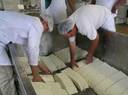
Cheddar: Refers to any cheese made by the
traditional process known as "cheddaring". Cheddaring means cutting
curds into small pieces, cooking them, then stacking the cut pieces to
allow them the whey to drain.
There is no trademark protection for the word cheddar and it can be made
anywhere. However, Cheddar is most commonly associated with English
farmhouse cheddar cheeses, some of which are members of Royalty
Cheesedom (Montgomery's and Keen's). These cheeses are made in Somerset,
U.K. from raw cow's milk, cream-colored without orange dye added, and
typically wrapped in cloth.
Chèvre: A fresh, young cheese made from goat's milk.
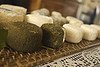
Crottin: Made from goat's milk, generally 10 days to 3 weeks old. Crottin which is aged up to 8 weeks is used for grating.
Double Crème: A soft, bloomy rind cheese to which cream with a minimum butterfat content of 60% has been added.
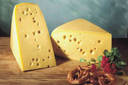
Emmentaler: Cheese with large eyes or holes, named after the river valley in Switzerland where it originated. In the U.S. Emmentaler is commonly known as Swiss cheese.
Farmstead (fermier): Cheese made by hand from milk produced by animals raised on the cheesemaker's property.
Fromage: French word for cheese.
Gamey: Refers to either the taste or aroma of cheese which strongly reflects its animal milk source. Young, fresh cheese should not have a gamey taste or aroma. But it can be perfectly acceptable and desirable for a more aged cheese to be described as gamey. Goat cheese with a strong, earthy tangy taste might be described as gamey.

Pasta Filata: An Italian term meaning spun paste. The words refer to the process by which such cheeses are made. They are kneaded (like bread) and the warm curds are stretched by hand or by machine, resulting in an elastic texture with a string-like quality.
Paste: The term used to describe the interior portion or meat of the cheese, below the rind. The texture of the paste can vary widely - from soft and buttery (fresh cheese) to firm and smooth to hard and dry (aged cheese).
Pasteurization: The process of heating milk in order to destroy any harmful micro-organisms. All cheese, both domestic and imported, which is less than 60 days old, is required by U.S. law to be made only from pasteurized, not raw milk.
Penicillium candidum: The white surface mold added to bloomy rind cheese. As these cheeses age the mold will develop a rind which will soften from the outside inwards, thus creating an interior paste which becomes increasingly soft and runny.
Penicillium roqueforti: The blue-green mold added to blue cheeses.
Rancidity: Refers to a chemical reaction which transforms milk fats into free, fatty acids, thus causing a spoiled flavor.
Rennet: Animal rennet is an enzyme (rennin) extracted from the 4th stomach of an unweaned calf. It is used in the cheesemaking process to break down the milk proteins so that they will coagulate into curds. Today the use of vegetable rennet (derived from artichoke, thistle and nettle plants), as well as microbial rennet (an enzyme extracted from mold) are commonly used instead of animal rennet. See Vegetarian Cheese.
Ricotta Salata: A dry form of ricotta cheese. It is made from whey which is drained, pressed and left to dry for weeks or months. It is used for grating.
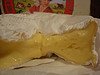
Ripe: A cheese is ripe when it has reached its optimum flavor and is ready to be consumed. A ripe cheese is also said to be "à point" - a French term meaning the same thing (literally, 'at the peak').
Runny: A term which can be either a positive or
negative characteristic of cheese. A Brie is ideally ripe when its
interior paste has a soft, almost runny consistency. However, a cheese
which has been improperly stored at too high a temperature, may become
runny and rancid - and totally inedible.
Semi-hard: Cheeses typically aged 3 months to 2 years, with a moisture content of 40-50%. Examples are aged Gouda and Emmentaler.
Semi-soft: Cheeses with a 50-75% moisture content, such as Havarti, Fontina, Morbier.
Terroir: A French word which encompasses all the characteristics of the area where a cheese is made - the local microclimate, the altitude, the rainfall, the types of grass and natural pasturage which the animal eats. It also refers to the season in which the milk was produced. If a goat, for example, eats hay in winter...but in summer it grazes in an alpine pasture in France, eating everything from grass, moss, berries, branches, bushes and clover...to herbs and flowers, then cheese produced from the goat's summer milk will taste far, far different from cheese produced by its winter milk.
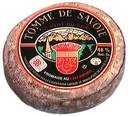
Tomme: A French term which means a fairly small round of cheese. Tommes are often identified by the region of origin, such as a Tomme de Savoie.
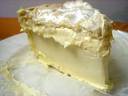
Triple-Crème: A soft, bloomy rind cheese to which cream with a minimum butterfat content of 74% has been added.
Turophile: A cheese lover. Also known as a caseophile.
Umami: A Japanese word and a relatively new term in the Western world, used to describe a 5th taste, after the well-known sweet, salty, sour and bitter. Umami would best be described as a savory taste, attributed to foods which are not easily classified into one of the 4 traditional taste groups. Think mushrooms, tomatoes, some shell fish....and some cheeses such as aged Cheddar or aged Parmesan.
Vegetarian: Vegetarian cheeses are made with non-animal derived rennet.
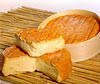
Washed Rind: Soft rind cheeses which have been rubbed and immersed in a solution of brine, wine, beer or grape brandy to bring about an exterior mold which causes the rind of the cheese to turn orange. The characteristic pronounced smell of Washed Rind cheeses is a result of the presence of this mold. Sometimes Washed Rind cheeses are referred to as "stinky" cheeses due to their strong aroma. But the taste is much milder than the smell might suggest.
Whey: The liquid portion of milk which is drained off after the milk proteins, or casein, begins to coagulate and form curds. Remember the old nursery rhyme..."Little Miss Muffett sat on a tuffett, eating her curds and whey..." ?
If you've found other cheese terms and definitions that should be added to this Cheese Glossary, or if you have a specific question about any cheese term you may have encountered, let us know and we'll be glad to respond. Contact Us here.
HOME › Cheese Glossary

Looking for something specific on GourmetCheeseDetective.com?
Enter your request below:
Follow The Gourmet Cheese Detective on Twitter: @The_Cheese_Tec